
Truth using Innovation Lab for hands-on life science; students eager to meet chicks after holiday weekend
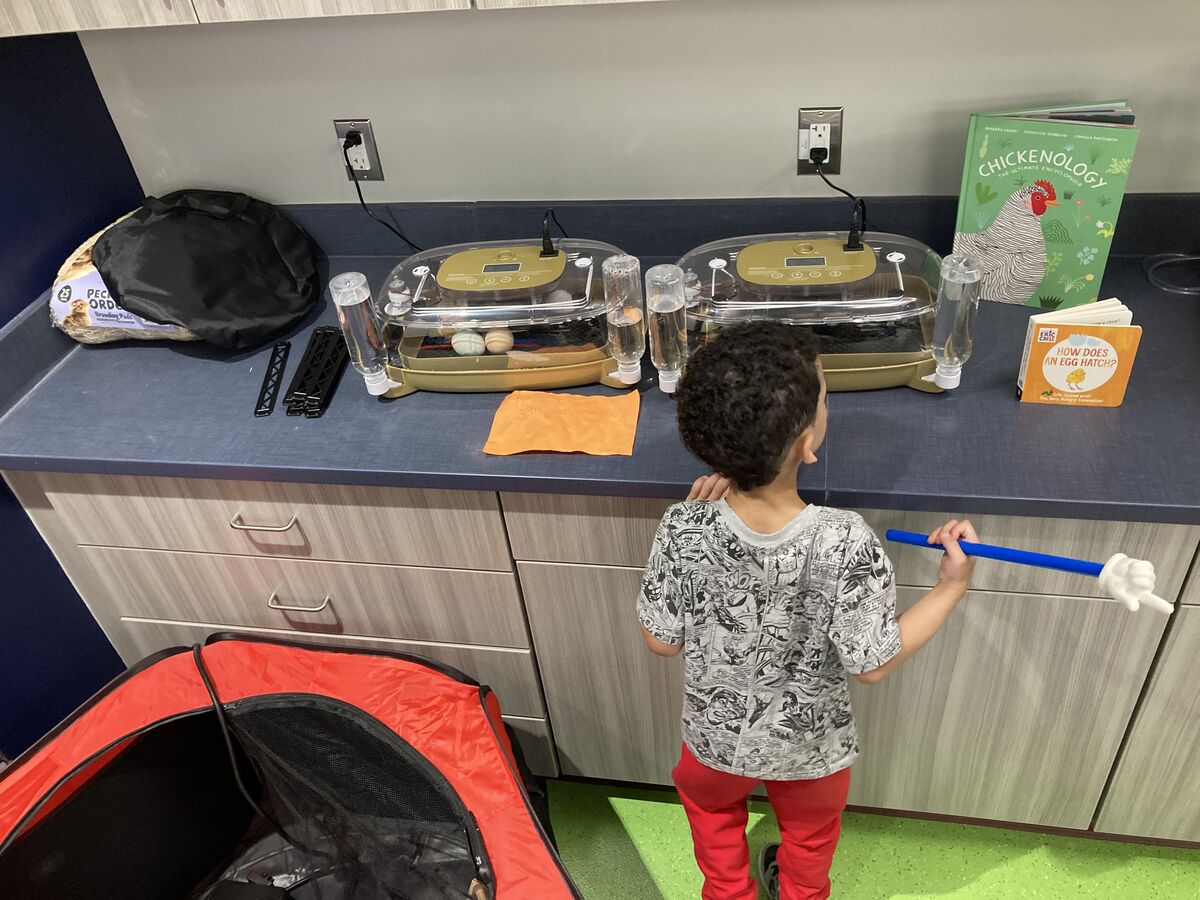 Students are expecting to find few new additions when they return to Sojourner Truth Elementary School Tuesday morning.
The school has been incubating chicken eggs inside its Innovation Lab for the past 19 days and they’re expected to hatch Sunday.
Principal Alicia O’Connell said the unit is part of a larger push to not only use the space to learn more about life science, but also to have her young scholars benefit from interactions with them. After the egg unit is finished the school plans to grow tadpoles before the year ends. And, for the past two months, the school has been home to a pet axolotl named Rosie The Riser.
“That’s what I want my Innovation Lab to be,” O’Connell said. “I’m building it into the schedule for next year, too. Everyone’s really excited.”
The school purchased two incubators to make the unit possible; she noted, having the Innovation Lab as a central place where all students can benefit from having just the two units makes the lesson cost effective.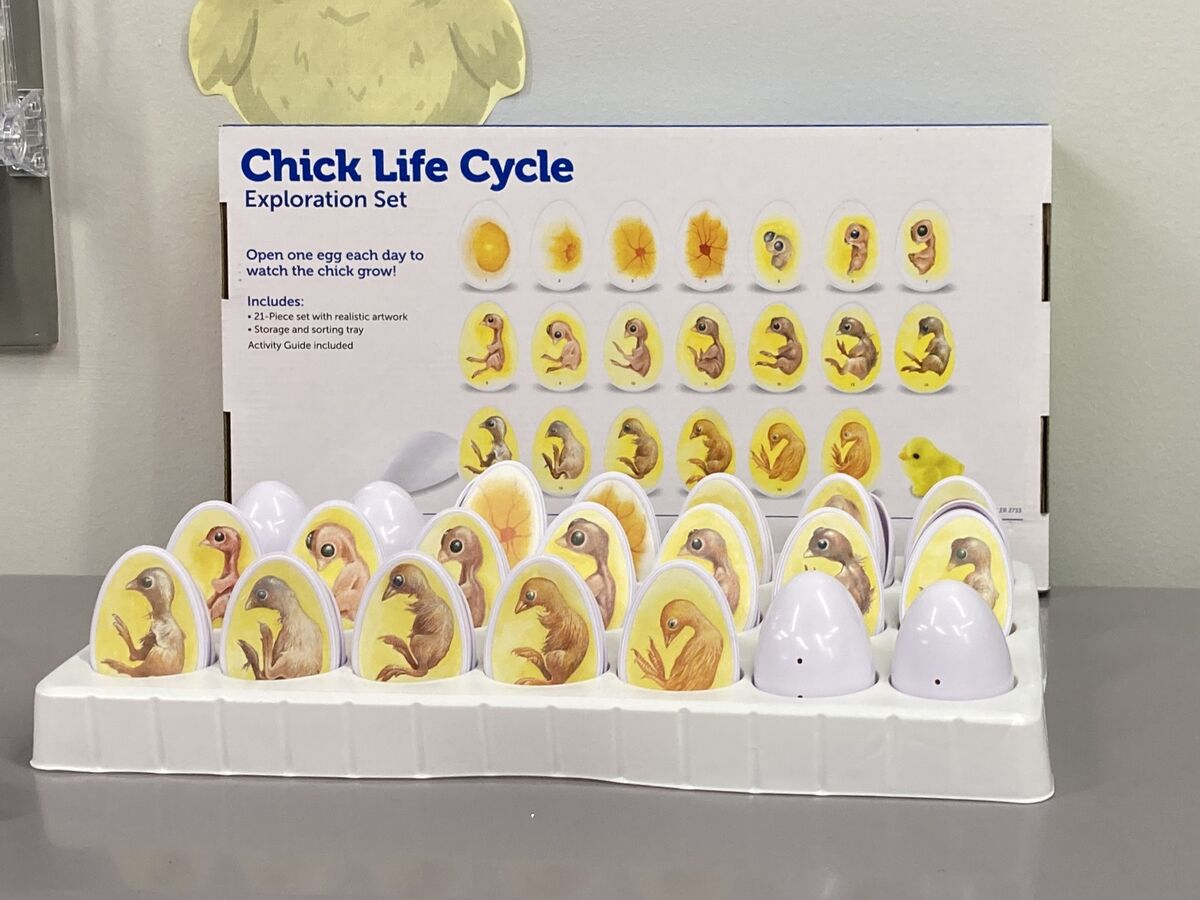 The lab also has a set of 21 plastic eggs, numbered for each day of the anticipated development cycle of a real egg. Each day a new egg is opened and, inside, there’s an illustration of what the chick embryo looks like inside. And, teachers have used the science lesson to teach vocabulary words like “sequence,” “incubate” and “pore.”
O’Connell, whose voice fills with energy while she describes the small details of raising eggs – “I’ve learned so much,” she said – plans to come into the school Sunday and Monday to check on the hatching. However, she said, a couple things she’s learned is chicks survive without food or water for their first day or two, and the incubator should only be opened once, when the process is complete, after Day 18 of 21.“
You can’t open it to take one out and wait for the rest,” she said. “Plus, they need to dry out a little bit.”
The lab has a “brooder box” for keeping the chicks enclosed after hatching, complete with a heat lamp and a small piece of playground equipment. The school plans to keep the chicks in the lab for about 10 days before various teachers take them home.
“They’ve been learning all about the kinds of chicks they could be, based on the different colored eggs,” O’Connell said.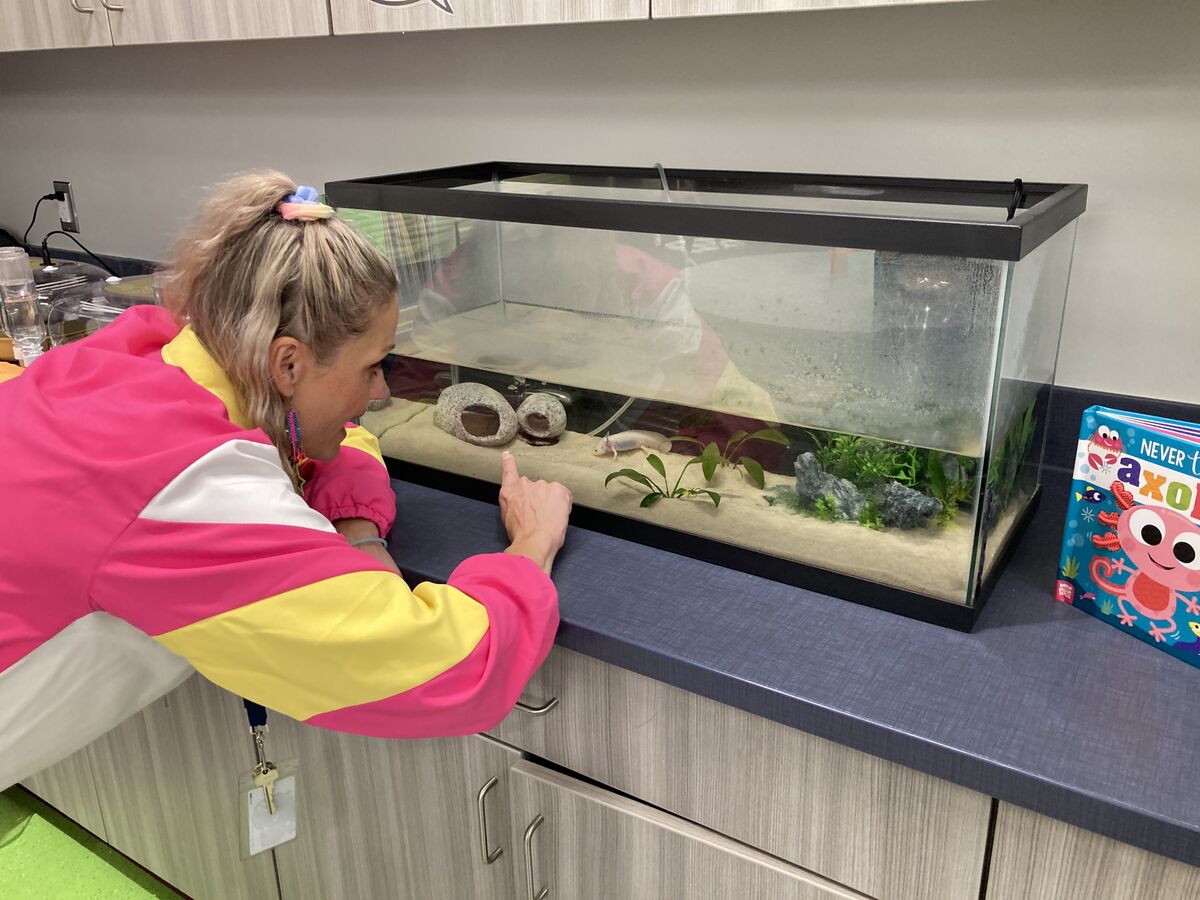 The incubator is located in the lab right next to Rosie’s water tank. She, too, has been much more than a pet to the students, O’Connell said. She’s doubled in size since coming to the school in March. She’s also regrown an arm, and the teachers have taught students about regeneration.
“Scientists study them because they will regenerate their spine, their brain, their heart, anything,” the principal said, before showing off how the axolotl will follow her finger on the other side of the tank. “She really is like a puppy. I was trying to teach her how to do flips. We’re not there, yet.”
She noted also the effect it has had on some of the more energetic students.
“They’ll come over here and they’ll regulate,” O’Connell said. “They know they need to be calm for Rosie.”